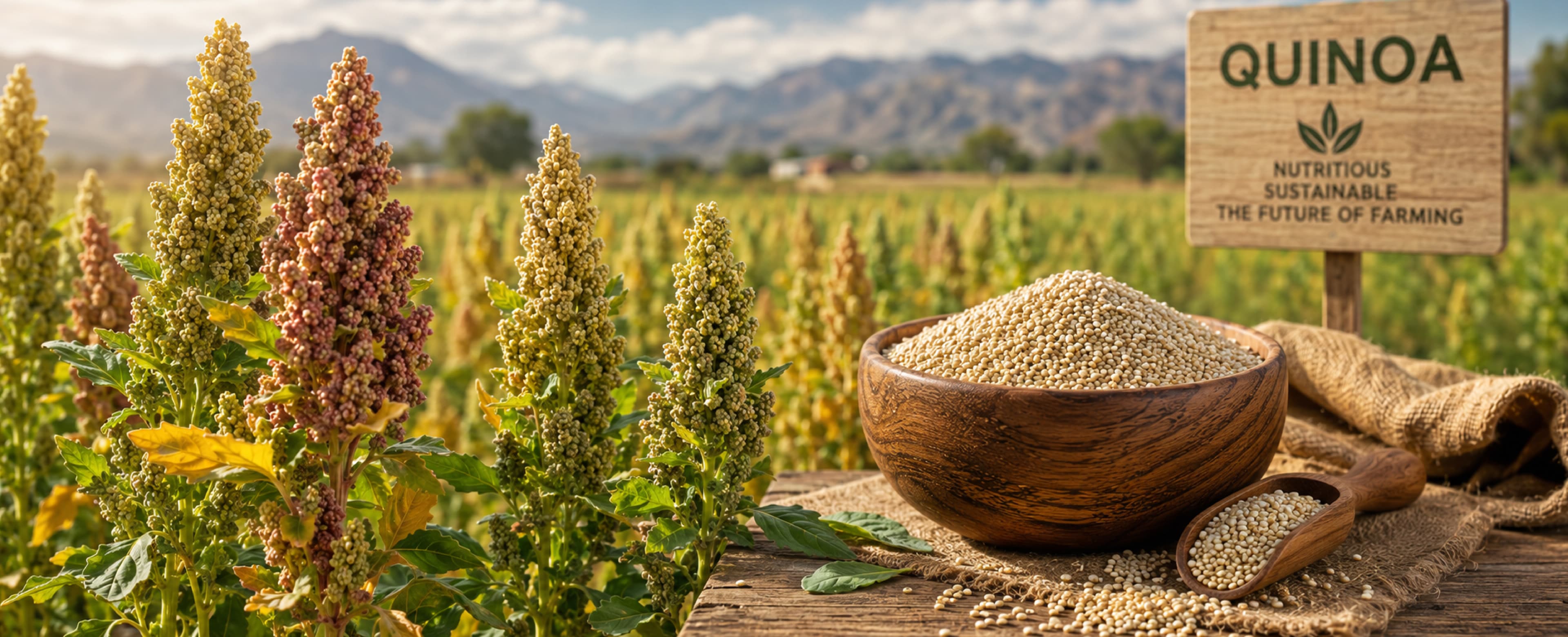
There was a time when quinoa was a strange-looking grain sitting quietly on the shelves of premium health stores. Today, it has become one of the most talked-about crops in the world. Rich in protein, loaded with nutrients, and loved by health-conscious consumers, quinoa has earned the title of a superfood. And honestly, unlike many foods that receive fancy labels for no apparent reason, quinoa actually deserves the attention.
From the Andes to Indian Fields: Quinoa's Remarkable Journey
Originally cultivated in the Andean regions of South America, quinoa has successfully crossed continents and found a place in Indian agriculture. What makes this crop special is its ability to tolerate drought, salinity, and challenging climatic conditions. While some crops throw a tantrum at the slightest weather fluctuation, quinoa quietly adapts and continues growing.
For farmers looking to diversify their cropping systems, quinoa presents an interesting opportunity. The crop performs best in well-drained sandy loam soils and requires moderate irrigation. It can be grown in several regions of India, especially where water scarcity is becoming a growing concern.
Why Farmers Are Giving Quinoa a Second Look
The increasing demand for healthy and nutritious foods has created a strong market for quinoa. Consumers are becoming more aware of what they eat, and quinoa fits perfectly into the modern trend of balanced diets. Its grains contain essential amino acids, dietary fiber, vitamins, and minerals, making it highly valuable in both domestic and international markets.
Cultivation practices are relatively straightforward. Quality seed selection, proper land preparation, timely sowing, and effective weed management contribute significantly to successful production. The crop generally matures within three to four months, depending on the variety and environmental conditions. Of course, quinoa farming is not a magical shortcut to instant wealth. Every crop comes with its own set of challenges, including market fluctuations and the need for proper post-harvest handling. However, its resilience and growing popularity make it an attractive option for progressive farmers.
A Small Seed with a Promising Future
As agriculture continues to adapt to changing climates and consumer preferences, quinoa stands out as a crop with tremendous potential. It combines nutritional value, environmental adaptability, and market demand in a way that few crops can.
Sometimes the biggest agricultural opportunities come in surprisingly small packages. Quinoa is proof that a tiny seed can create a big impact not just on our plates, but also in our fields and farming communities.