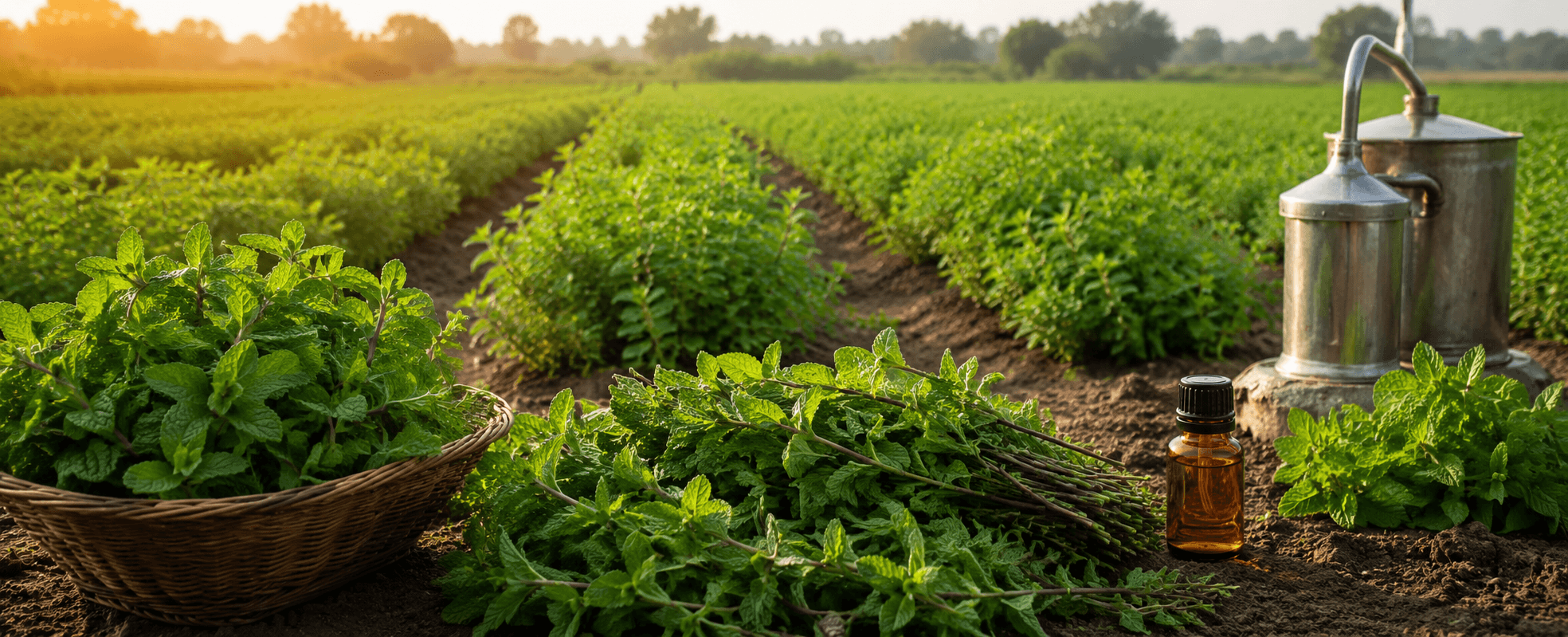
People often believe that only acres of wheat or sugarcane can fill a farmer's pocket. Well, peppermint quietly smiles from the corner and says, Don't judge me by my size. This aromatic herb has become one of the most profitable medicinal crops because of its growing demand in pharmaceuticals, cosmetics, food products, and essential oils. But does it really make good money? Let's clear the air along with that refreshing minty fragrance.
The Investment Isn't Huge, But the Planning Should Be
Peppermint farming doesn't ask for a fortune to get started. Depending on the quality of planting material, irrigation, fertilizers, and labour, the cultivation cost generally ranges between ₹45,000 and ₹70,000 per acre. It grows well in fertile, well-drained soil and requires timely irrigation during the growing season.
Now here's the funny part some farmers spend more time worrying than actually planning. Peppermint isn't a lottery ticket; it's a crop that rewards good management. Healthy planting material, proper weed control, and harvesting at the right stage make a noticeable difference in the final returns.
Yield and Income: This Is Where Peppermint Starts Smelling Like Profit
Under proper cultivation practices, farmers can harvest around 80 to 120 quintals of fresh herbage per acre. After distillation, this generally produces about 40 to 70 kilograms of peppermint essential oil, depending on the variety and crop management.
Since peppermint oil prices fluctuate according to market demand and quality, returns can vary every season. In a favourable market, farmers often earn gross incomes ranging from ₹1.2 lakh to ₹2.5 lakh per acre. After deducting production costs, the net profit can still be attractive, making peppermint one of the most promising medicinal crops for commercial cultivation. Of course, expecting bumper profits while ignoring irrigation or harvesting late is like expecting tea without adding tea leaves. Nature is generous, but it appreciates effort.
Profit Depends on Selling Smart, Not Just Growing Well
The biggest advantage of peppermint is that its market extends far beyond local mandis. Essential oil manufacturers, Ayurvedic companies, cosmetic brands, food industries, and exporters regularly purchase quality peppermint oil. Farmers who connect with buyers directly or add value through proper distillation often earn significantly better returns than those selling raw produce.
The real business isn't just farming peppermint; it's understanding the market before planting it. That's where successful growers quietly stay ahead while others keep asking why their neighbour's field always seems luckier.
The Final Harvest
Peppermint farming may not look glamorous, but it certainly knows how to reward smart decisions. With proper cultivation practices, careful cost management, and a strong marketing strategy, this humble herb can become a dependable source of income. After all, sometimes the freshest opportunities don't come from growing bigger crops they come from growing the right ones.