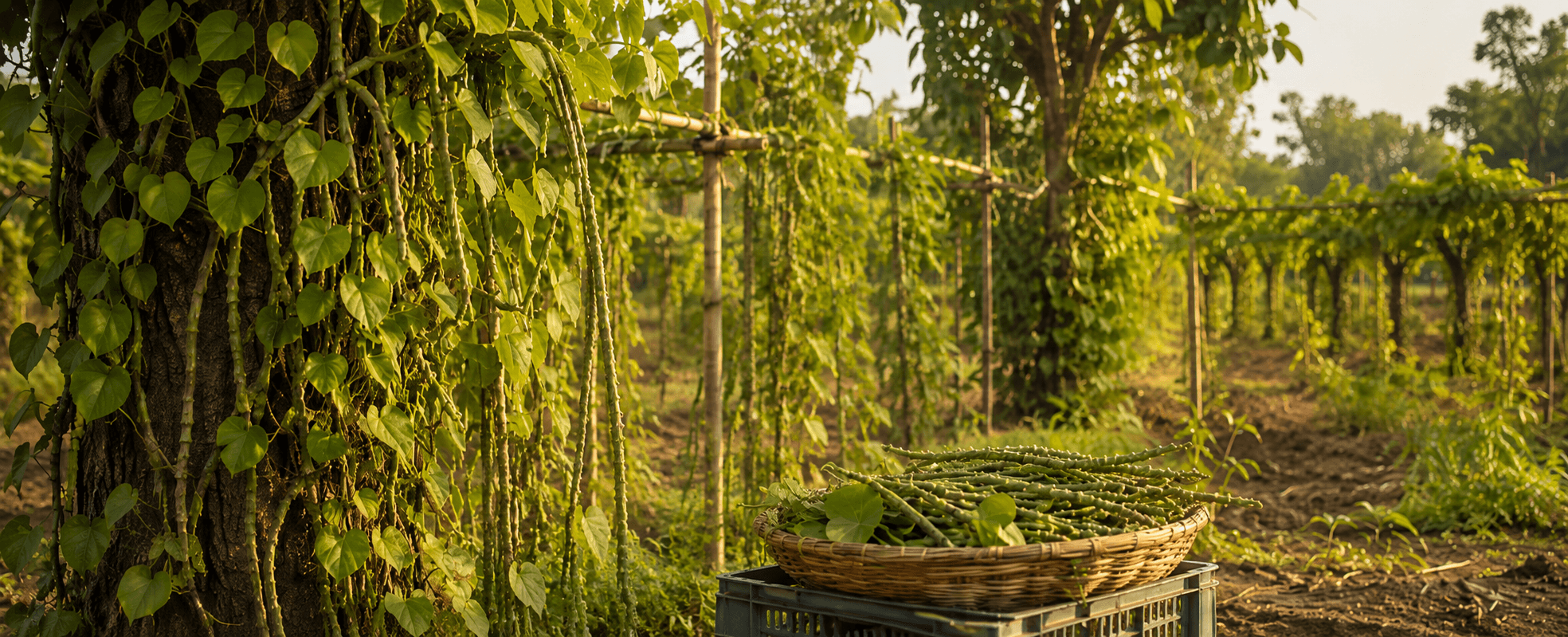
For years, farmers chased the usual suspects: wheat, rice, sugarcane. Meanwhile, Giloy, a humble vine hanging lazily on trees and fences, was silently building a reputation as one of India's most demanded medicinal herbs. Sometimes the quiet ones really do surprise everyone. With Ayurveda becoming mainstream and herbal products moving from grandmother's kitchen shelves to premium retail stores, giloy farming in India is turning into a serious business opportunity rather than just another traditional crop.
Why Farmers Are Suddenly Looking Up at This Creeper
The rise in demand for immunity boosters after recent health scares pushed giloy market demand to an entirely different level. Herbal companies, Ayurvedic medicine manufacturers, and wellness brands are constantly searching for quality raw material.
The interesting part? Giloy doesn't throw tantrums like many commercial crops. It grows well in tropical and subtropical climates, adapts to different soil conditions, and requires relatively low maintenance. In a world where some crops demand attention every other day, Giloy behaves more like the responsible child of the farming family.
Giloy Cultivation: Simple Farming with Surprisingly Good Returns
Giloy cultivation usually begins with stem cuttings planted during the monsoon season. The crop prefers well-drained soil and needs support structures or trees for climbing. Once established, the plant continues producing stems that can be harvested multiple times. This makes it attractive for farmers exploring medicinal plant farming or diversification into cash crops in India. Production costs remain moderate while the harvesting cycle offers regular income opportunities. Of course, farming never comes with a "profit guaranteed" sticker, but Giloy certainly stacks the odds a little more in the farmer's favour.
The Business Side: Where the Real Story Begins
The market for medicinal herb cultivation is expanding rapidly. Ayurvedic pharmaceutical companies, herbal supplement manufacturers, and exporters are actively sourcing Giloy stems and extracts. For entrepreneurs interested in a herbal farming business, Giloy offers both domestic and export potential. As consumers continue choosing "natural" products over chemical-heavy alternatives, profitable medicinal crops like Giloy are likely to stay relevant for years rather than seasons.
The Final Climb
Giloy may look like an ordinary vine wrapping itself around trees, but in the right hands, it can wrap itself around a profitable business model too. Sometimes the next big farming opportunity isn't standing tall in the field it is quietly climbing up the nearest tree.