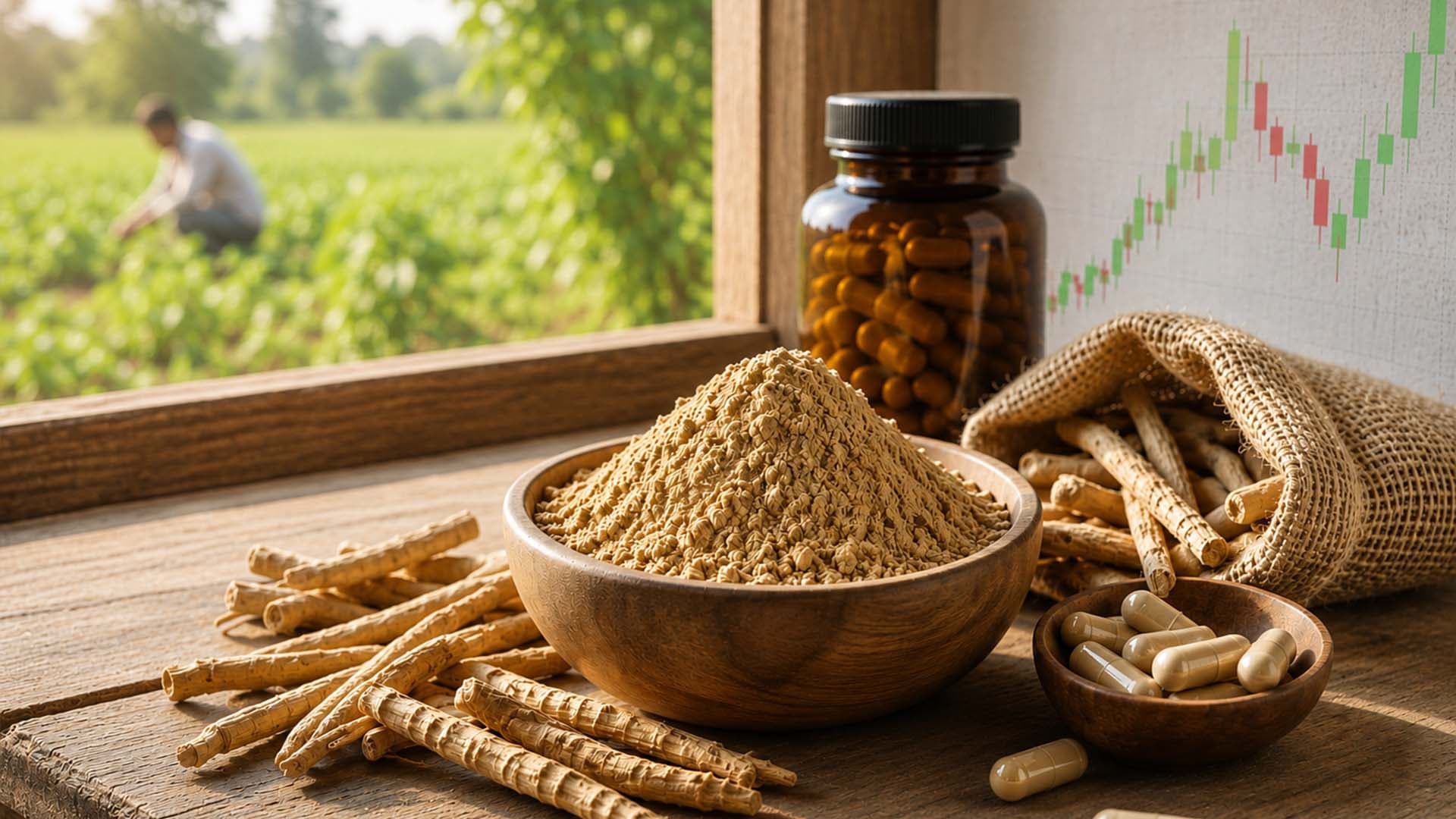
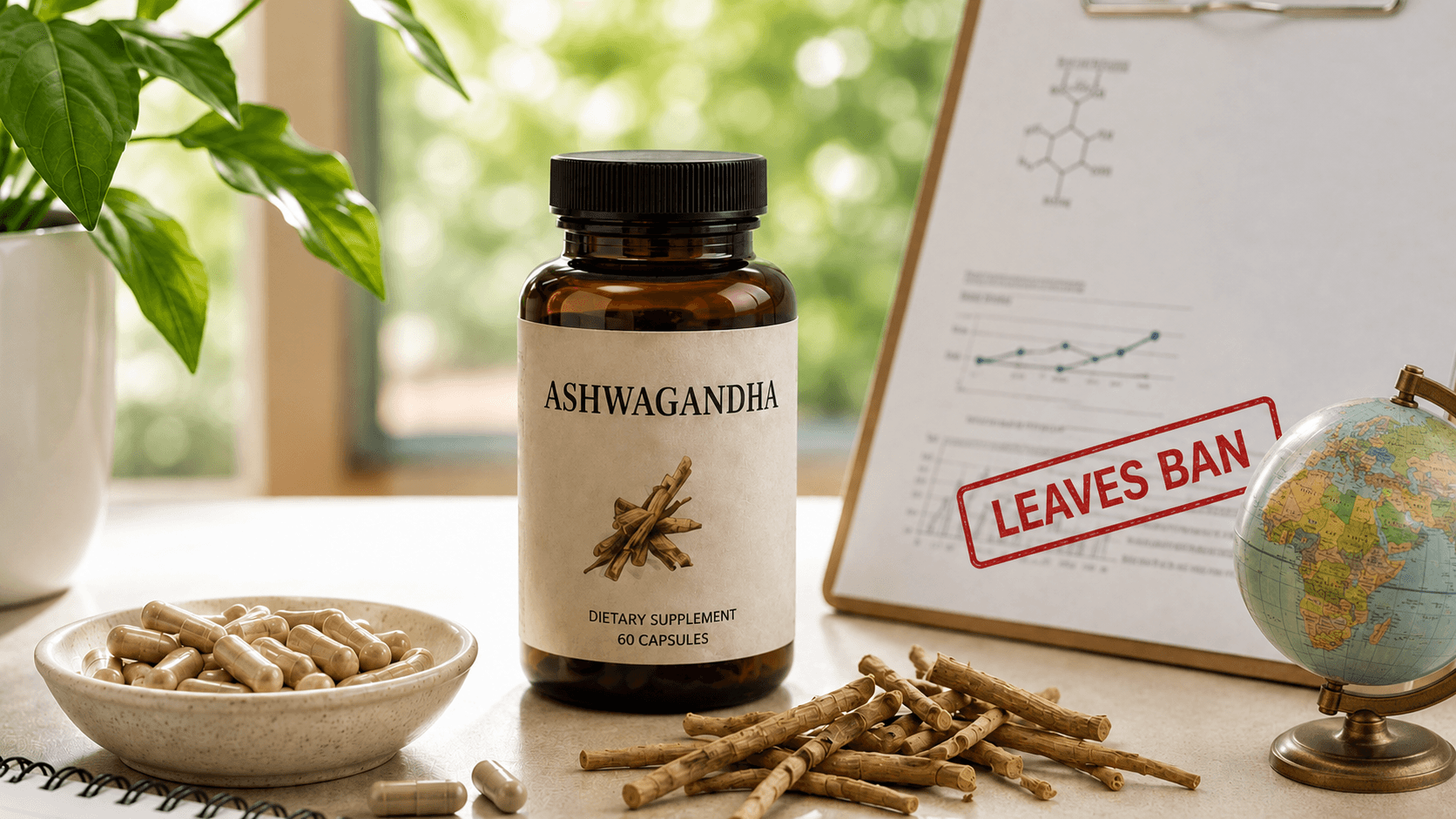
Let's start with a quick geography lesson. Denmark, a country of 6 million people, excellent pastries, and apparently very strong opinions about Indian herbs, decided in April 2023 to ban ashwagandha. The reason? A 2020 report by the Danish Technical University (DTU) said, essentially, that there might be hormonal effects and that ashwagandha could cause abortions. Yes. The same ashwagandha that has been in Ayurvedic medicine for over 3,000 years. The one your mother probably told you would give you strength like a horse (the name literally means "smell of horse," so make of that what you will).
And now, India's FSSAI has issued a directive in April 2026 banning ashwagandha leaves from supplements and nutraceuticals. So now the country that invented the herb is telling manufacturers: use only the root, not the leaf. The wheel has come full circle, but it is extremely confused.
The Denmark Situation: Caution or Chaos?
The DTU report had real problems. A peer-reviewed editorial published in the Journal of Ayurveda and Integrative Medicine in 2024 tore it apart methodically. The report concluded that ashwagandha roots from studies on leaves, stems, berries, and even methanol extracts, which is a bit like banning coffee because espresso machines electrocute people if you drop them in a bathtub.
One of the most embarrassing revelations: the report claimed abortifacient effects based on a citation chain that eventually traces back to a traditional handbook, which, when read correctly, actually said ashwagandha was used to prevent miscarriages, not cause them. The American Herbal Pharmacopoeia had to issue a formal clarification. A clarification. About a misread footnote. That banned a global herb.
Now India Bans Its Own Herb's Leaves. Awkward
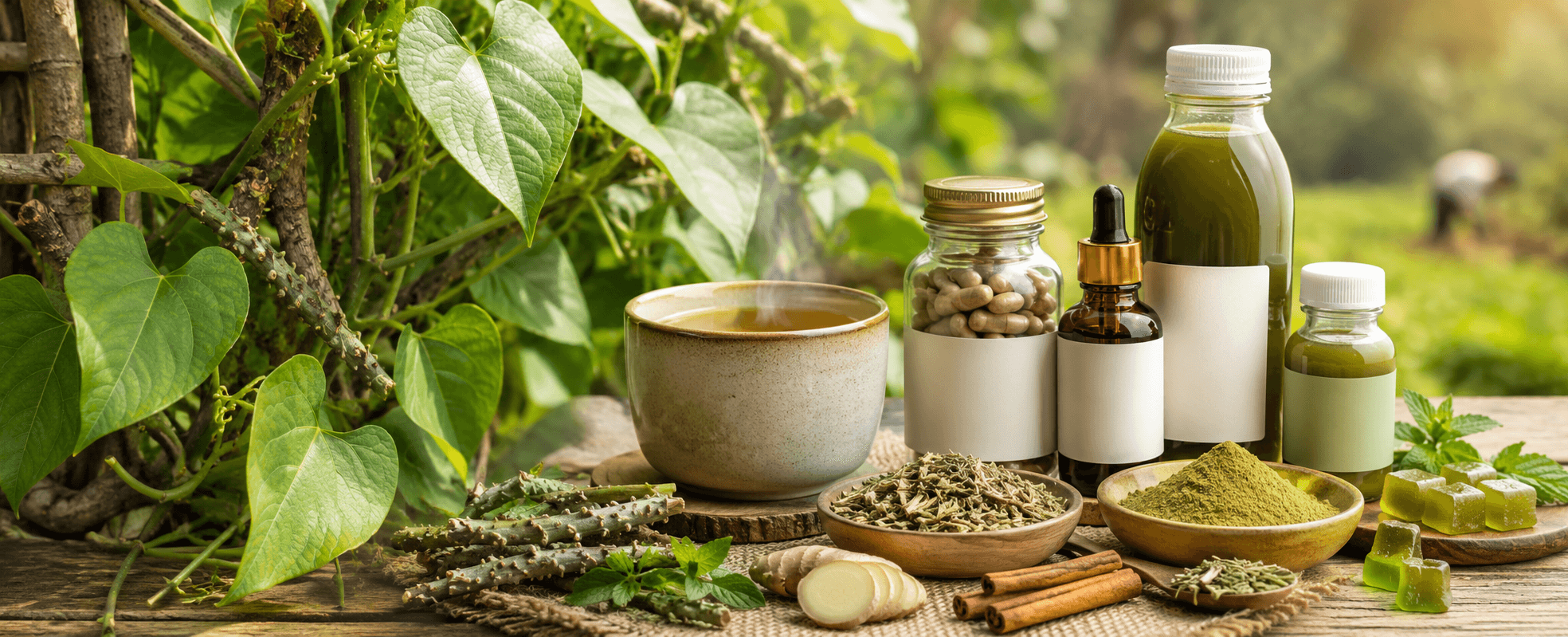
Here's the thing about India's FSSAI directive in April 2026: it's actually more defensible than Denmark's move. There is a real and specific reason: ashwagandha leaves contain significantly higher concentrations of a compound called withaferin-A, which is linked to liver toxicity and gastrointestinal problems. The root, historically what Ayurveda always prescribed (3–5 grams of root powder per day), doesn't have this issue.
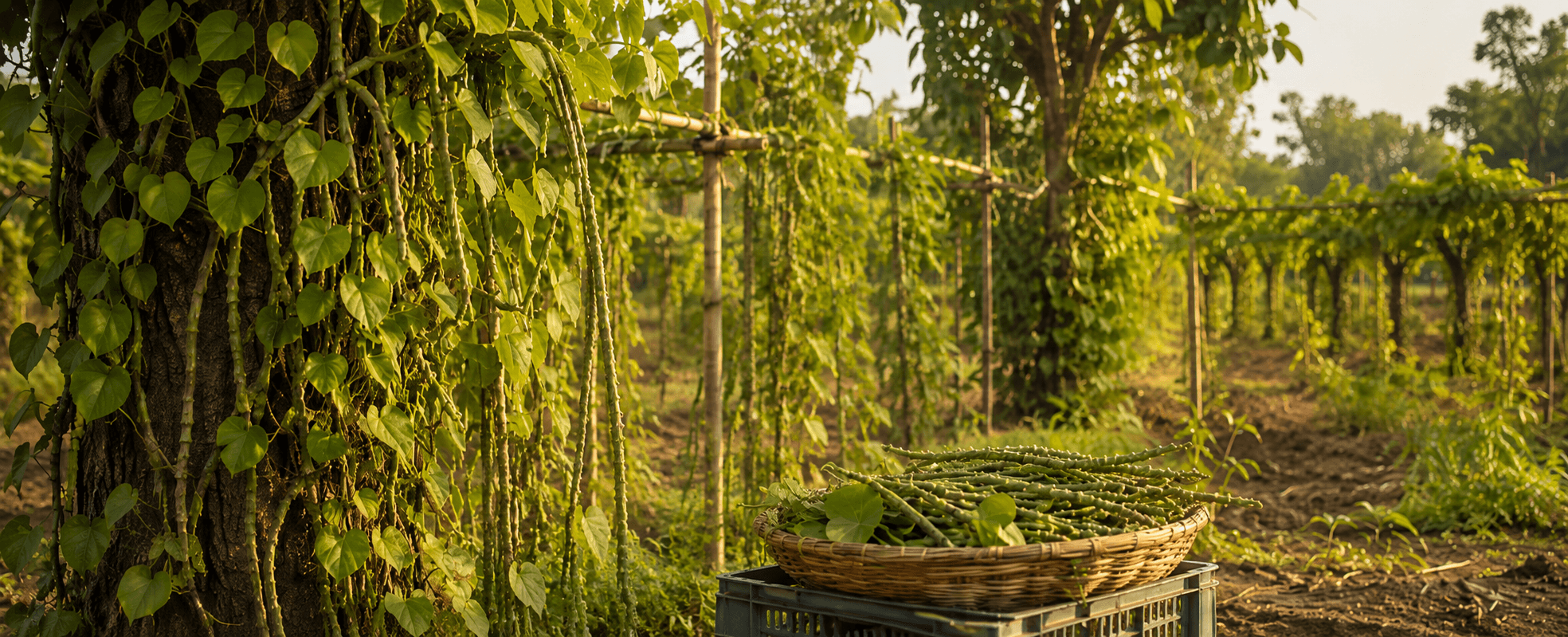
But here is the truly fascinating part: India was selling more ashwagandha leaf than root. Government data from 2024–25 showed 4,698 tonnes of leaf sold compared to 4,170 tonnes of root in a market where almost every product label says "root extract." The leaf ban wasn't purely a safety move. It was a fraud control wearing a safety badge.
The Trade Angle Nobody Is Talking About Loudly Enough
Let's be real about what's happening here commercially. Ashwagandha is the top-selling adaptogen globally. It appears in gummies, protein powders, sleep capsules, teas, skincare, and I wish I were making this up energy drinks marketed to Gen Z on TikTok. The market is closing in on a billion dollars. Every ban, advisory, or scary-sounding news headline moves that market.
India is deeply aware of the geopolitical dimension here. The Ministry of AYUSH released a full Ashwagandha Safety Dossier in 2024. Modi launched the Ayush Market at the Second WHO Global Summit on Traditional Medicine in December 2025.