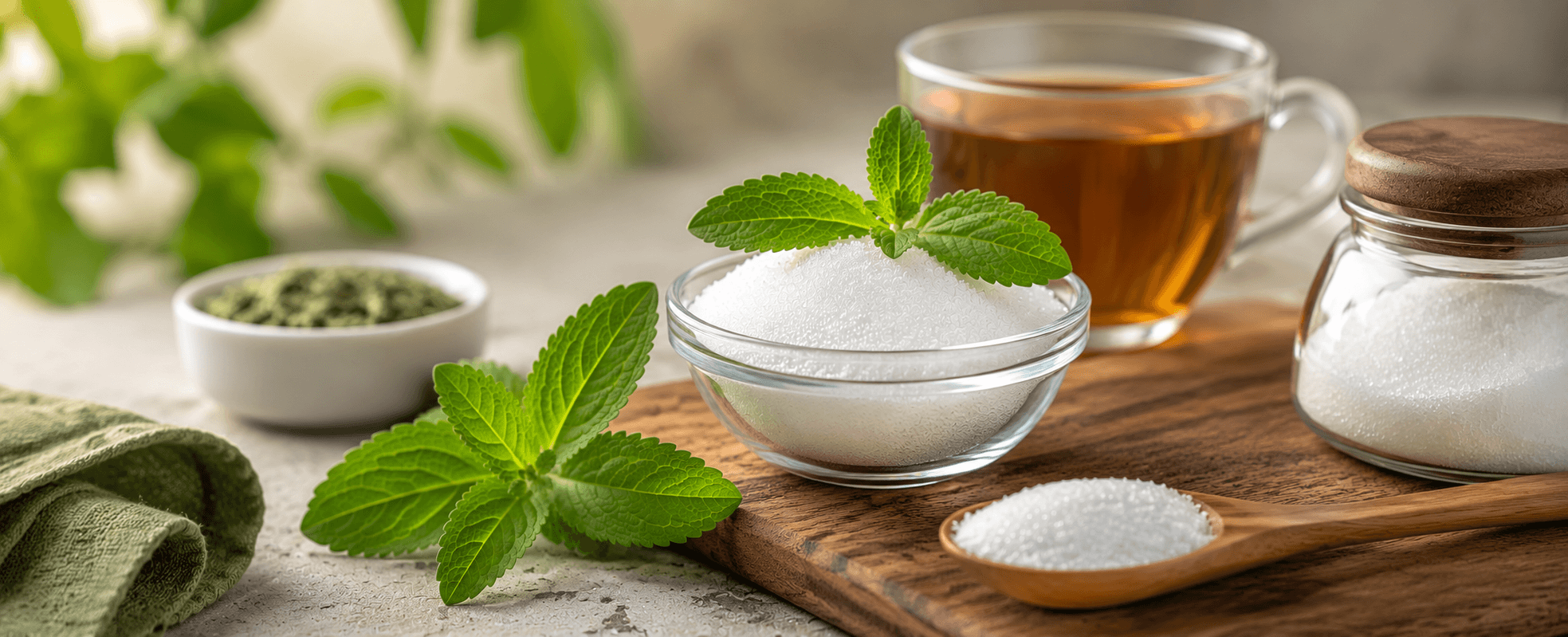
Stevia has become that one guest at the table who shows up uninvited, but somehow everyone still talks about. Zero calories, plant-based, and sweeter than sugar sounds like a dream, right? But naturally, people ask the real question: Is stevia safe, or is it just another healthy label hiding a complicated truth?
Stevia Under the Scientific Lens
When scientists looked at stevia, they didn’t find anything dramatic enough for a horror story. Steviol glycosides, the compounds responsible for sweetness, are generally considered safe when consumed within acceptable daily limits. That’s why global food authorities, including the FDA, have approved purified stevia extracts as safe sweeteners. So yes, your morning guilt-free coffee sweetened with stevia is not plotting against your health. But like most things in nutrition, moderation is still the boring but necessary advice nobody wants to hear.
Stevia Side Effects: Small But Not Invisible
Now, before we crown stevia the king of all natural sugar substitutes, there are a few tiny hiccups. Some people report mild stevia side effects like bloating, a slightly bitter aftertaste, or digestive discomfort when overused. Nothing dramatic, but your gut may quietly judge your life choices if you go overboard. Also, highly processed stevia blends mixed with other sweeteners can behave differently in the body, so reading labels is not just for overthinkers it actually matters.
Stevia Health Benefits and the Bigger Picture
The reason stevia gets so much attention is the potential health benefits it doesn’t spike blood sugar, it’s tooth-friendly, and it helps people reduce overall sugar intake. For those trying to manage diabetes or cut calories, it can be a useful natural sugar substitute. But let’s not pretend it’s magic. It’s not going to cancel out a diet full of processed food just because you swapped sugar for stevia. Science supports it, yes, but it’s still one piece of a much larger health puzzle.
Final Thoughts: So, Is It Safe or Just Smart Marketing?
So, is stevia safe? The science says yes, within limits. It’s one of the better-researched FDA-approved sweeteners, and for most people, it’s a solid alternative to sugar. But it’s not a free pass to drown everything in sweetness and call it health. Think of stevia as that responsible friend who’s helpful in small doses but slightly annoying when overused. In the end, stevia isn’t a miracle, and it’s not a villain either, it’s just a tool. And like any tool, it works best when you’re not pretending it can fix everything in your diet.